





American Persimmon Tree
- $21.58
$71.95- $21.58
- Unit price
- per
Please hurry! Only 1000 left in stock
Limited-Time Offers, End in:
151D
8H
23M
0S
Subtotal:
$21.58
10 customers are viewing this product
Couldn't load pickup availability
Free Shipping
Free standard shipping on orders
Free Returns
Learn More.

Description
xRich, Sweet Fall Flavor!
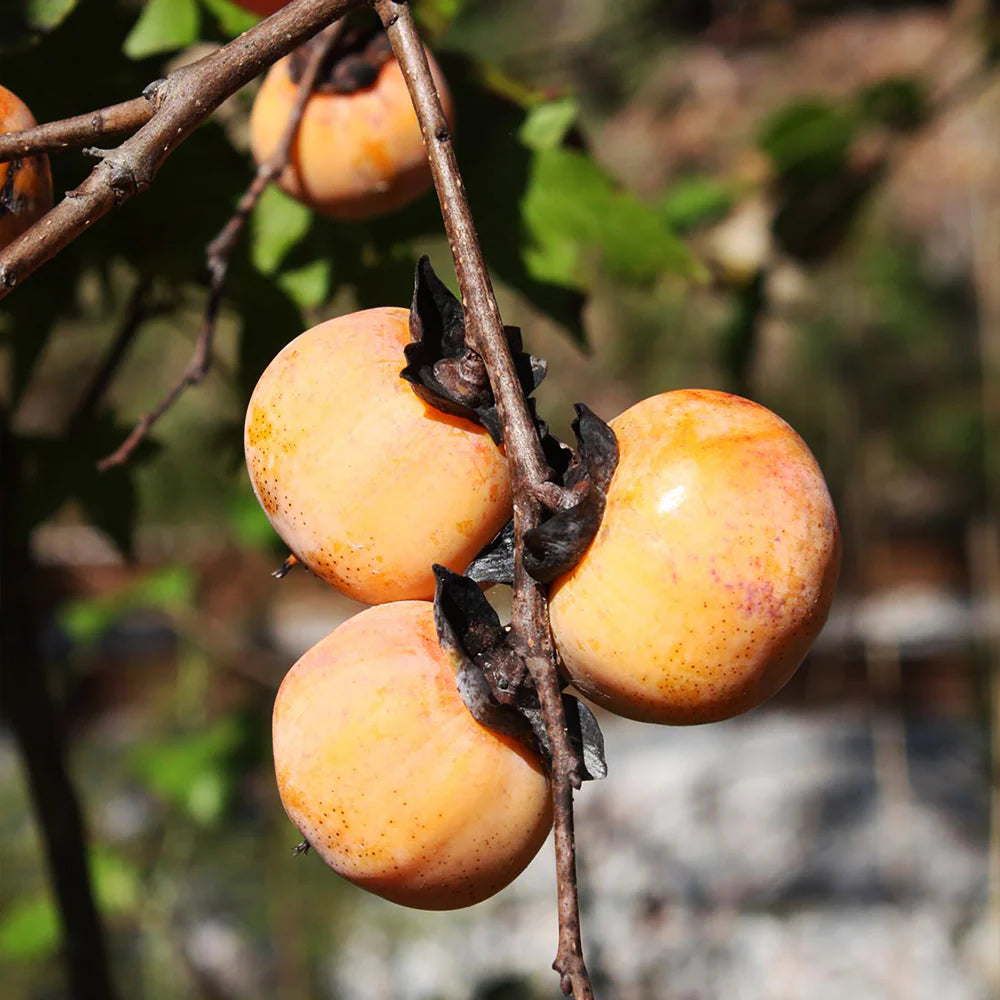
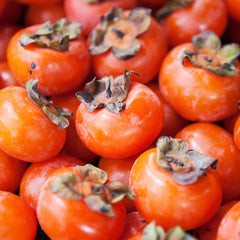
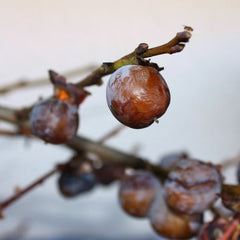
Also known as the "common persimmon," this bright-orange - and sometimes yellow, red and even blue
- fruit bearing tree is anything but common.
In fact, it's uncommonly available at most nurseries and greenhouses, and has uncommonly delicious ripe product -- the shape of a one- to two-inch beefsteak tomato -- that lends itself to cakes, cookies, sorbets, and ice cream.
Its high calcium, vitamin C, potassium and iron yield also makes it a high-energy dried snack
and its pulp freezes well for future use.
As an addition to your landscape, this Indiana native, while a slow grower and slow to mature to "fruit-ion", can be pruned initially to have either a strong central leader (trunk) or open center.
American Persimmon branches, typically starting just two or three feet from the ground, need little pruning once they become fruit-bearing to maintain their broad-spreading, wide-base shape.
Foliage color variety enhances any garden or open space, and this long-oval leafed tree transforms through the seasons from light bright green, through dark pine to fall colors in the same warm range as its fruit: yellow, orange and salmon, tinged with red and crimson.
In the spring, it is festooned with yellow-white, waxy, open-bell shaped flowers that begat acid green unripe fruits.
The American Persimmon also brings abundant fruit-eating wildlife to your yard. If you are a rural grower, you can expect copious deer as they are drawn to the fruit like kids to candy. Families that hunt will find the woods nearby well populated with game as a result; the fruit hangs on the trees well through the hunting season. Whether you live in the country or city,
your American Persimmon will also attract a wide variety of regional songbirds as well as squirrels, raccoons and even bats.
The Edible Economics of Persimmon Fruit
While fiercely bitter and sour unripe,
the ripe persimmon is richly sweet and almost nutty in flavor.
Your persimmon(s) will begin to bear fruit as early as three years, and as late as 10 from initial young-tree planting. Each tree can yield from 35 to 75 pounds of hand-picked fruit, harvested after a long season of ripening before or long after the first frosts. With the right market established, growers expect to sell their crop for about $2.75 per pound. Commercial crops typically consist of 300 $20 trees per acre with profitable yields at year four. The wood of the persimmon also has a market for crafting of musical instruments.
Preferred Culture and Cultural Practices
Healthiest and happiest in USDA Hardiness Zones 7-9, your persimmon may also do well in Zone 6, so long as you grow it in well-draining but moist loam soil, and water frequently; while mature trees can handle some drought, young trees cannot. While very cold and freeze hardy, it is good to protect your trees from early frosts in a low-lying area, thus increasing ripening time. Other than these considerations, you'll find your American Persimmon to be adaptable to everything from flood plains to wooded areas, and full sun to partial shade.
Related Products
Example product title
- from $21.58
$71.95- from $21.58
- Unit price
- per
Example product title
- from $21.58
$71.95- from $21.58
- Unit price
- per
Example product title
- from $21.58
$71.95- from $21.58
- Unit price
- per
Example product title
- from $21.58
$71.95- from $21.58
- Unit price
- per
Example product title
- from $21.58
$71.95- from $21.58
- Unit price
- per
Example product title
- from $21.58
$71.95- from $21.58
- Unit price
- per
Example product title
- from $21.58
$71.95- from $21.58
- Unit price
- per
Example product title
- from $21.58
$71.95- from $21.58
- Unit price
- per
Example product title
- from $21.58
$71.95- from $21.58
- Unit price
- per
Example product title
- from $21.58
$71.95- from $21.58
- Unit price
- per
Recently Viewed Products
Example product title
- from $21.58
$71.95- from $21.58
- Unit price
- per
Example product title
- from $21.58
$71.95- from $21.58
- Unit price
- per
Example product title
- from $21.58
$71.95- from $21.58
- Unit price
- per
Example product title
- from $21.58
$71.95- from $21.58
- Unit price
- per
Example product title
- from $21.58
$71.95- from $21.58
- Unit price
- per
Example product title
- from $21.58
$71.95- from $21.58
- Unit price
- per
Example product title
- from $21.58
$71.95- from $21.58
- Unit price
- per
Example product title
- from $21.58
$71.95- from $21.58
- Unit price
- per
Example product title
- from $21.58
$71.95- from $21.58
- Unit price
- per
Example product title
- from $21.58
$71.95- from $21.58
- Unit price
- per
- Choosing a selection results in a full page refresh.