






Shinseiki Asian Pear Tree
- $25.18
$83.95- $25.18
- Unit price
- per
Please hurry! Only 1000 left in stock
Limited-Time Offers, End in:
151D
8H
23M
0S
Subtotal:
$25.18
10 customers are viewing this product
Couldn't load pickup availability
Free Shipping
Free standard shipping on orders
Free Returns
Learn More.

Description
xDeliciously Sweet and Low in Acidity
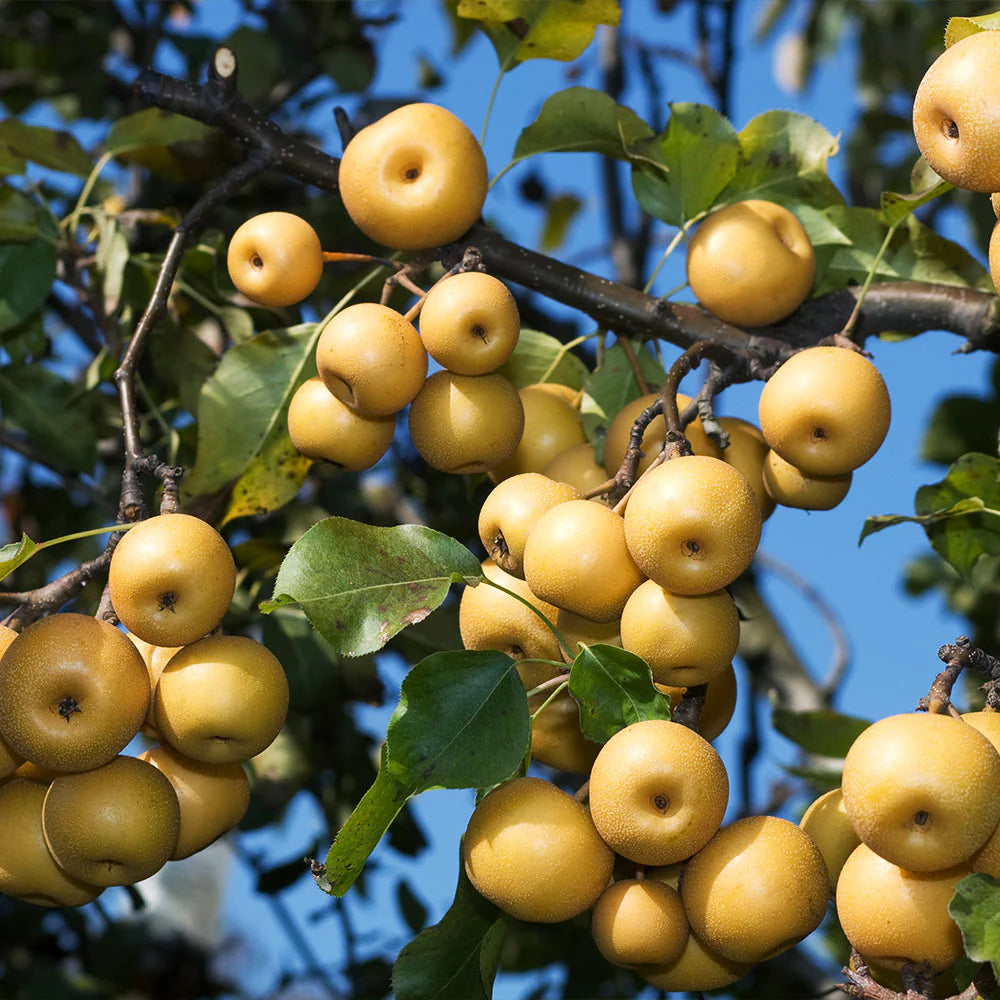
One variety in a vast category of Asian pears, the Shinseiki are medium-sized, round, have yellow skin and are desirable because
they are tasty when crisp (at harvest) as well as ripened to a softer, but still firm, texture after many months in cold storage.
Most Asian pears appeal to people who prefer apples like Granny Smiths over Red Delicious and a pear that is crisper, less juicy, and desirable for salads, tortes, roasted meat and other dishes that benefit from lower sugary juice content.
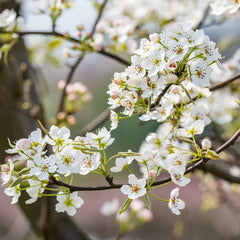
Covered with early-mid spring white blossoms that bear uniform fruit,
this Asian pear prefers to have a strong central leader and tends to grow into a vertical oval if pruned properly.
It will send high limbs vertically to create a rounded evergreen shape if left un-pruned.
Aesthetically, your garden area or orchard will benefit from the pleasing combination of this variety's long, bright green leaves and round, almost ornament-like, golden yellow fruits.
Where and What Stock Type of Shinseiki to Plant
The Shinseiki tree will thrive in growing zones 5 through 9. This pear has been imported to the U.S. primarily from Japan and is most often seen in the Sacramento Valley of California and scattered throughout the fruit orchards of Oregon and Washington states. The Shinseiki adapts well to readily available rootstocks like Bartlett, and typically dwarfs the larger, more robust stock tree sizes.
These very winter hardy pears may tolerate cold to 20 degrees below zero,
but are best suited for areas that don't regularly dip below 10 degrees. If you plant a Shinseiki, or any Asian pear, in a colder climate (i.e. the central Pacific pf-northwest), it will be hardiest if it was cultivated on a cold-hardy stock like Old Home; in southern climes, this pear can be grown from almost any stock type.
While growing Asian Pears is a developing plant science, experimental programs conducted by University of California, Davis indicate they do best in one-variety patches in cold climates, and interspersed with other cross-pollinating Asian or European varieties in southern zones.
Cultural Practices and Commercial Viability
Most Asian pears are susceptible to a variety of diseases and pests, all of which can be mostly or entirely controlled by organic cultural practices. For example, fireblight can be managed through pruning the damaged and infected limbs and keeping pruning tools disinfected.
Overly deep soil can cause crown rot, so avoid thick loam. Coddling moth is one Asian pear pest that is likely to require insecticide treatment.
For maximum crop production during early-to-mid-season harvest (July through August in most areas), you'll want to make sure your Shinseiki(s) get ample water, but never have soggy roots in poorly draining soil. They also tend to over flower, so thin bud clusters to leave just a few flowers on each.
Related Products
Example product title
- from $25.18
$83.95- from $25.18
- Unit price
- per
Example product title
- from $25.18
$83.95- from $25.18
- Unit price
- per
Example product title
- from $25.18
$83.95- from $25.18
- Unit price
- per
Example product title
- from $25.18
$83.95- from $25.18
- Unit price
- per
Example product title
- from $25.18
$83.95- from $25.18
- Unit price
- per
Example product title
- from $25.18
$83.95- from $25.18
- Unit price
- per
Example product title
- from $25.18
$83.95- from $25.18
- Unit price
- per
Example product title
- from $25.18
$83.95- from $25.18
- Unit price
- per
Example product title
- from $25.18
$83.95- from $25.18
- Unit price
- per
Example product title
- from $25.18
$83.95- from $25.18
- Unit price
- per
Recently Viewed Products
Example product title
- from $25.18
$83.95- from $25.18
- Unit price
- per
Example product title
- from $25.18
$83.95- from $25.18
- Unit price
- per
Example product title
- from $25.18
$83.95- from $25.18
- Unit price
- per
Example product title
- from $25.18
$83.95- from $25.18
- Unit price
- per
Example product title
- from $25.18
$83.95- from $25.18
- Unit price
- per
Example product title
- from $25.18
$83.95- from $25.18
- Unit price
- per
Example product title
- from $25.18
$83.95- from $25.18
- Unit price
- per
Example product title
- from $25.18
$83.95- from $25.18
- Unit price
- per
Example product title
- from $25.18
$83.95- from $25.18
- Unit price
- per
Example product title
- from $25.18
$83.95- from $25.18
- Unit price
- per
- Choosing a selection results in a full page refresh.